What happened on 7th Feb?

January
I received an odd alert on my iPhone: Low Walking Steadiness - Your walking steadiness is low and you may have an increased risk of falling in the next 12 months.
Strange….
February
On February 7th I was sitting at my desk in the office on a work call when I was suddenly “hit” from the left side by a strong wave of dizziness/lightheadedness. I had to grab the desk as it felt like I might fall off my chair. This was more a lightheaded/off-balance type dizziness rather than room spinning. I left the office early as it didn't pass and I was concerned about vertigo due to this being in the family, and definitely didn’t want to be in the office if it progressed into a full vertigo episode.
We went to the after hours 2 days later as symptoms persisted. Everything checked out as fine other than my temperature which was slightly high so I was told it was likely viral and given anti nausea meds which should have helped the dizziness too. They only provided approximately 20 minutes relief and left me with a rebound headache so I did not continue taking them. I also had a medical certificate for 1 week off work and during this time all I could really do was lie on my bed staring at the walls. Watching tv was too much movement and would make me nauseous.

After this first week the dizziness eased enough for me to return to work but the symptoms were still there constantly which made work very difficult. I worked another 2 weeks before seeing my regular GP. At the time I was considering changing GP so I also had an interview the following day with a new one, this proved to be one of the greatest blessings in this process.
March
My old GP said it was most likely to be a high blood pressure issue despite my pressure being spot-on perfect at the after hours clinic on February 9th. We went through to the nurse and waited while they found the blood pressure cuff for me. The nurse said while we waited that we needed the correct size or it would be an inaccurate reading. The GP then walked in with the wrong size, told the nurse to take the reading which of course came up with a ridiculously high number so I said “oh but the cuff didn't fit”. The GP said it didn't matter and prescribed me blood pressure medication… except she forgot to press send so it never actually made it to the pharmacy.
The next morning I had my first appointment/interview with the new GP and given what happened the day before I decided to straight away enrol rather than interview and then go away to consider whether to change.
Right away the entire atmosphere was completely different. The new GP was actually listening to what I was saying which was a novelty in itself. Once we got through the standard medical history we were able to get to the current issue, for which she began with my blood pressure. I mentioned the cuff size and what the old GP had said the day before. She said it absolutely makes a difference, and sure enough my blood pressure was normal. She also performed a neurological exam, something the other two GP’s hadn't done yet. This was showing normal but it was getting towards the realm of abnormal that I was still symptomatic after so long. She gave me a medical certificate for another week off work (my dizziness was back quite strongly at this point), ordered some blood tests, and said if my symptoms were still there in another two weeks she would refer me to an ENT specialist.

During the next two weeks she did recall me back into the clinic a few times for more tests as she thought of things but these all came up normal/unremarkable. Around this time she submitted the referral to the ENT specialist, who in turn requested that I do a full audiology assessment prior to the appointment. The audiology assessment came back normal, and it was around this time that the symptoms really settled into a more migraine pattern rather than mainly being dizziness/balance focused so my GP also submitted a referral to a neurologist in both the public and several in the private system (public in case it was faster as the wait time even in private was looking to be 3-6 months). Interestingly, the public system came back and said my migraine and balance issues did not sound neurological but perhaps I should try losing weight and maybe an eye test to exclude papilloedema… so I immediately booked the eye test and excluded that along with ocular neuritis which is another condition which can cause these symptoms. My goal at the time was to do as many tests to rule out as much as I could ahead of the neurology consult given how long the waitlist was!
Throughout this time I was still really struggling with the dizziness and head pain. I was doing my best to try to get through the days and maintain a sense of normalcy but in reality things were pretty miserable. I had no energy so when I would struggle to do a full day or a full week of work, and when I wasn’t working I was just lying on my bed dizzy, nauseous, and in pain. I also found it difficult to explain to people what I was going through, because saying “I have a headache” felt very much like it was minimising the experience but I also had no diagnosis yet and not many people I could talk to who really understood chronic pain and chronic illness. And this was still very early in the journey too, but none of us knew that of course.
April
Bert’s trip with Tearfund to the Philippines was rapidly approaching and we were both quite nervous about this because my health was so bad at this stage. I had constant head pain, very frequent lightheadedness, nausea, loss of balance, chronic fatigue, and no amount of rest seemed to help. What I did know though is I absolutely did not want Bert to miss this opportunity, so I was going to find a way to make it through somehow - and with the help of family, friends, and our church, I was able to do it. I’d walk Holly in the morning and Dad would do her night time walk for me.
Church provided Nathan and I with meals and prayer, my niece drove Nathan to a few of his appointments for me (I don’t feel safe to drive anymore), and work allowed me to work from home on extra days, take extra time off, and a few other accommodations. It was rough, but it worked. We immediately followed it up with our trip to the Wairarapa which again, was exhausting - but this time I had Bert.
Around the time of the Wairarapa trip is when I fully realised that no pain medications I tried were helping at all. I already knew the anti-nausea meds that were targeting the dizziness didn’t help so I had stopped using that but I was still attempting to try voltaren from time to time (I had given up on panadol and nurofen long ago). I’d take the voltaren and sometimes think it might work, but ultimately knew it wasn’t really. This was really confusing to me because I didn’t understand how I could be having such strong head pain and take what seemed to be strong medications with no effect at all.
Eventually the ENT consult rolled around. Bert, my GP and I all knew that my symptoms were most likely unrelated to my ears at this point but we really were just checking boxes because we still didn’t know what the cause of my illness was. Sure enough, everything in that exam was normal. He referred me for a head and cervical spine MRI, and a vestibular function test as this would allow them to check my ears individually (standard tests can only do both simultaneously). These were mainly just to be sure he wasn’t missing anything but he did say that he didn’t expect anything so show on the imaging and tests. I was relieved to have the MRI referral though, as this meant I’d be able to have the imaging completed before seeing the neurologist and avoid another wait.
May
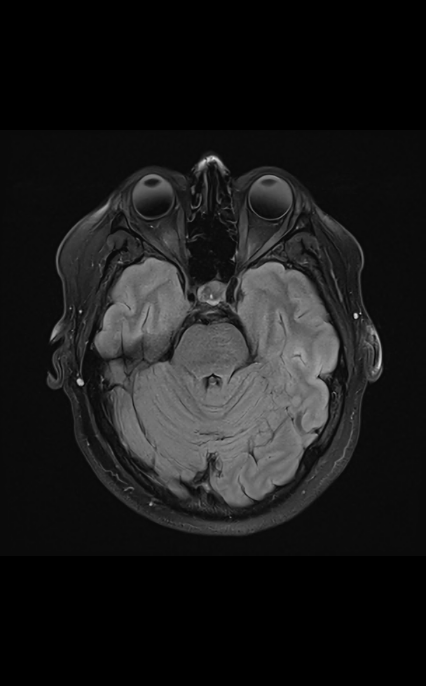
I was able to book my MRI quite quickly, and not far from home which was a relief. The actual MRI though was an odd experience. I don’t typically get claustrophobic but there’s something about having your neck in a U-shape mould, a cage over your face, being burritoed in a yoga mat, and then shoved into a big magnetic doughnut that will just somehow bring out a little claustrophobia in me apparently! The results? Normal/unremarkable. To be honest, this one was quite surprising as we were pretty convinced there was something quite wrong with my brain at this point.
Finally the neurology consultation arrived. It felt like there was a lot riding on this, it had been 3 months of a 24/7 headache and intermittent dizziness but felt like so much longer. The consultation started out as you’d expect - giving the history so far, symptoms, current meds etc. We then moved onto the physical examination which again seemed to begin relatively normally - following his finger with my eyes, testing my balance, checking nerve sensitivity…. Then things kind of got a little weird. I think I understand him asking me to hop on one foot (although I’m a little on the fence about that one still), but what I’m not convinced about was him pulling out a feather and tickling my eyeballs with it and asking if I could feel it. Um yes, you are touching my eyeballs with a feather so of course I can feel that. Thank you for asking.
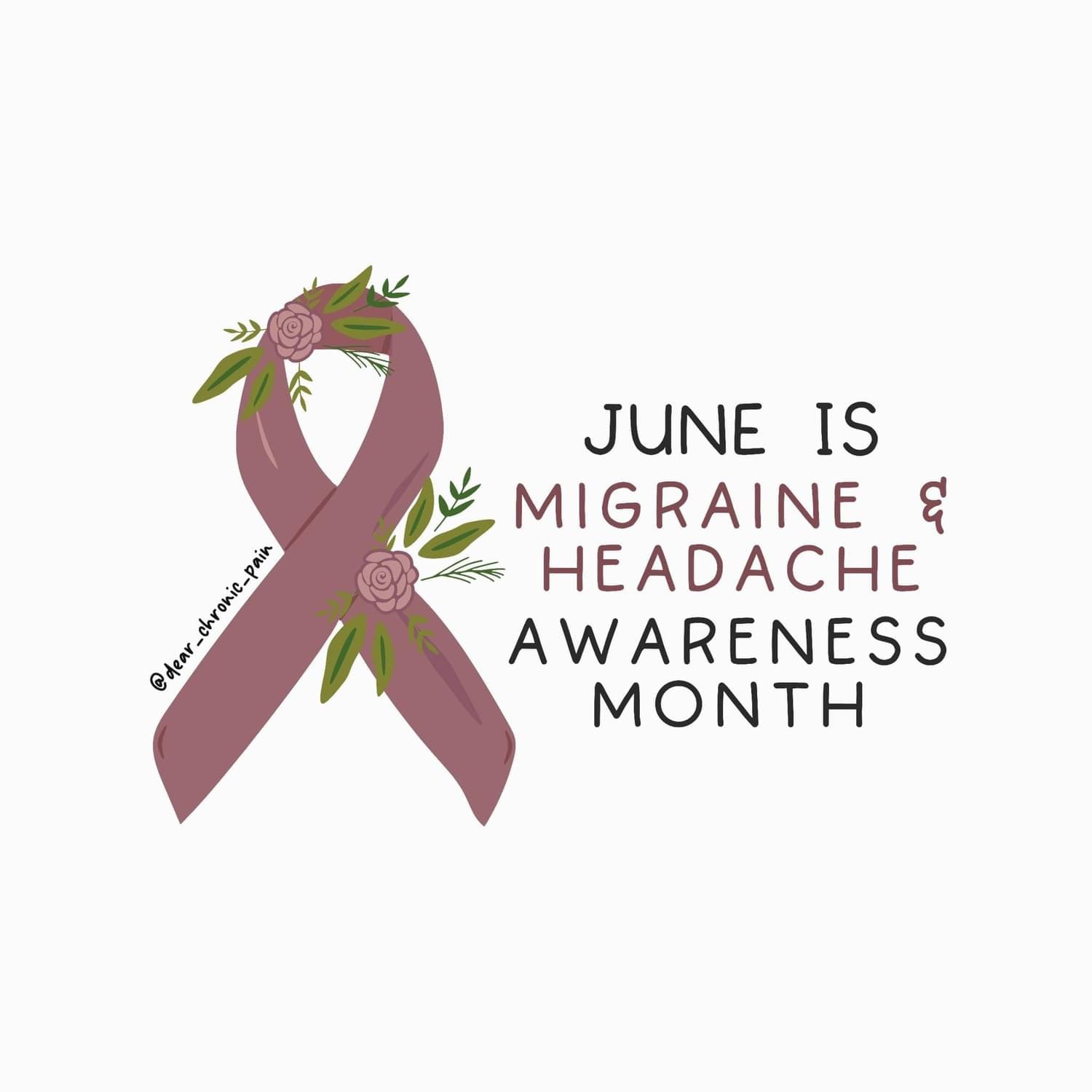
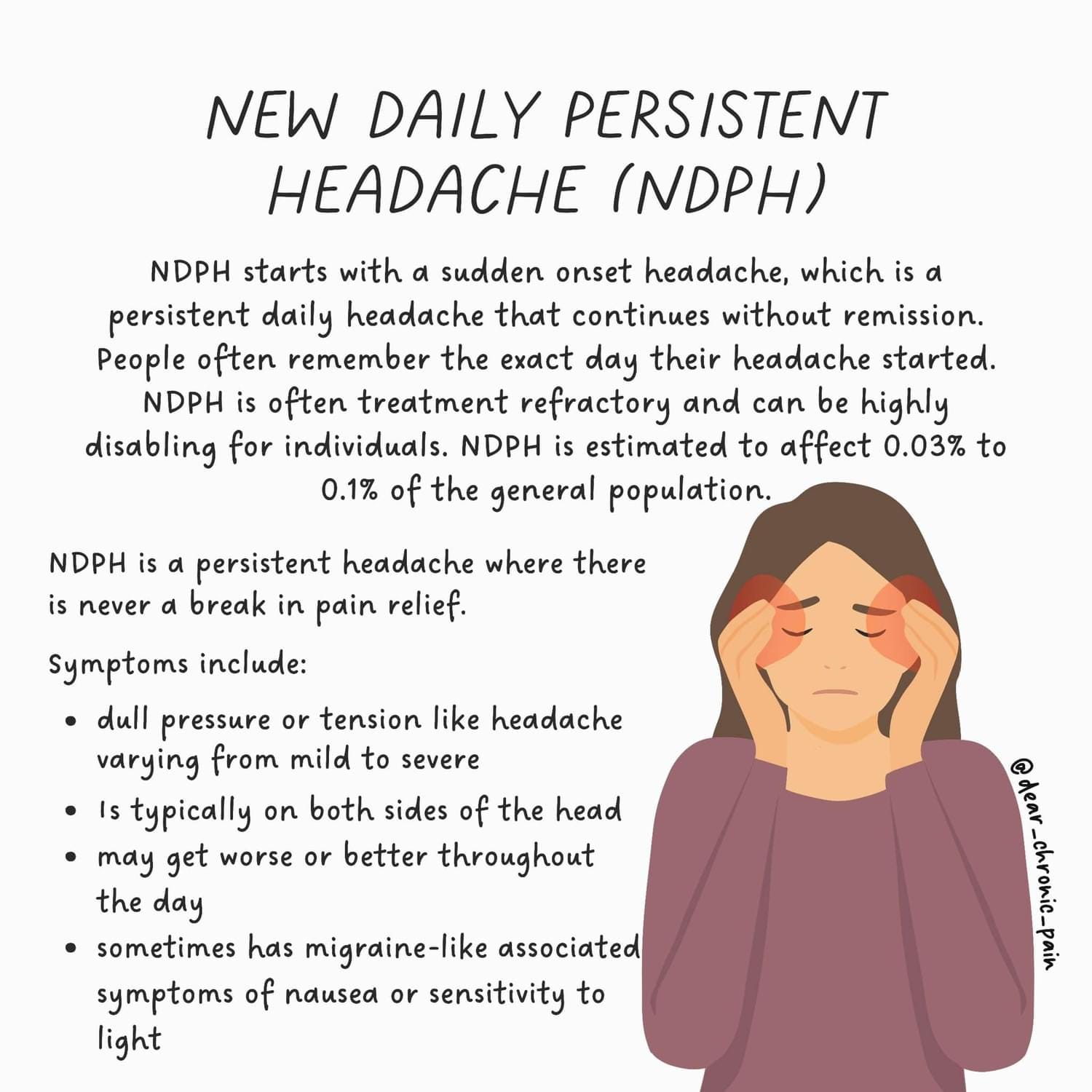
So, initially he said everything was normal and wasn’t diagnosing me with anything. He considered doing a lumbar puncture (in case of intracranial hypertension) but ultimately felt there wasn’t enough to warrant undergoing that type of procedure (fairly invasive and often results in a severe headache!). What he did settle on as a diagnosis though was New Daily Persistent Headache Disorder (migraine subtype, vestibular), which is a relatively new classification of headache disorders. The criteria for diagnosis is a headache that has persisted for a minimum of 3 months, the patient can identify the day it began, and there is no other underlying cause (therefore, it is a “new” headache). Other characteristics of NDPH is that the headache is medication resistant. Suddenly everything is making so much more sense.
He prescribed me a migraine-specific medication (topiramate, for those of you in the migraine world) which I did find a bit odd considering the medication resistance aspect, but I was going to try anything really. It had a really really REALLY long list of side effects but if nothing else worked, why not try it… Turns out that long list is the reason why, but we’ll come back to that. I did start the medication that evening though, it had been so long already and I was READY for something to help. Due to the side effects and type of medication I had to start on a very low dose and increase slightly each week, reaching the full dose after 4 weeks. It would then be approximately 6 weeks to notice improvements in the condition.
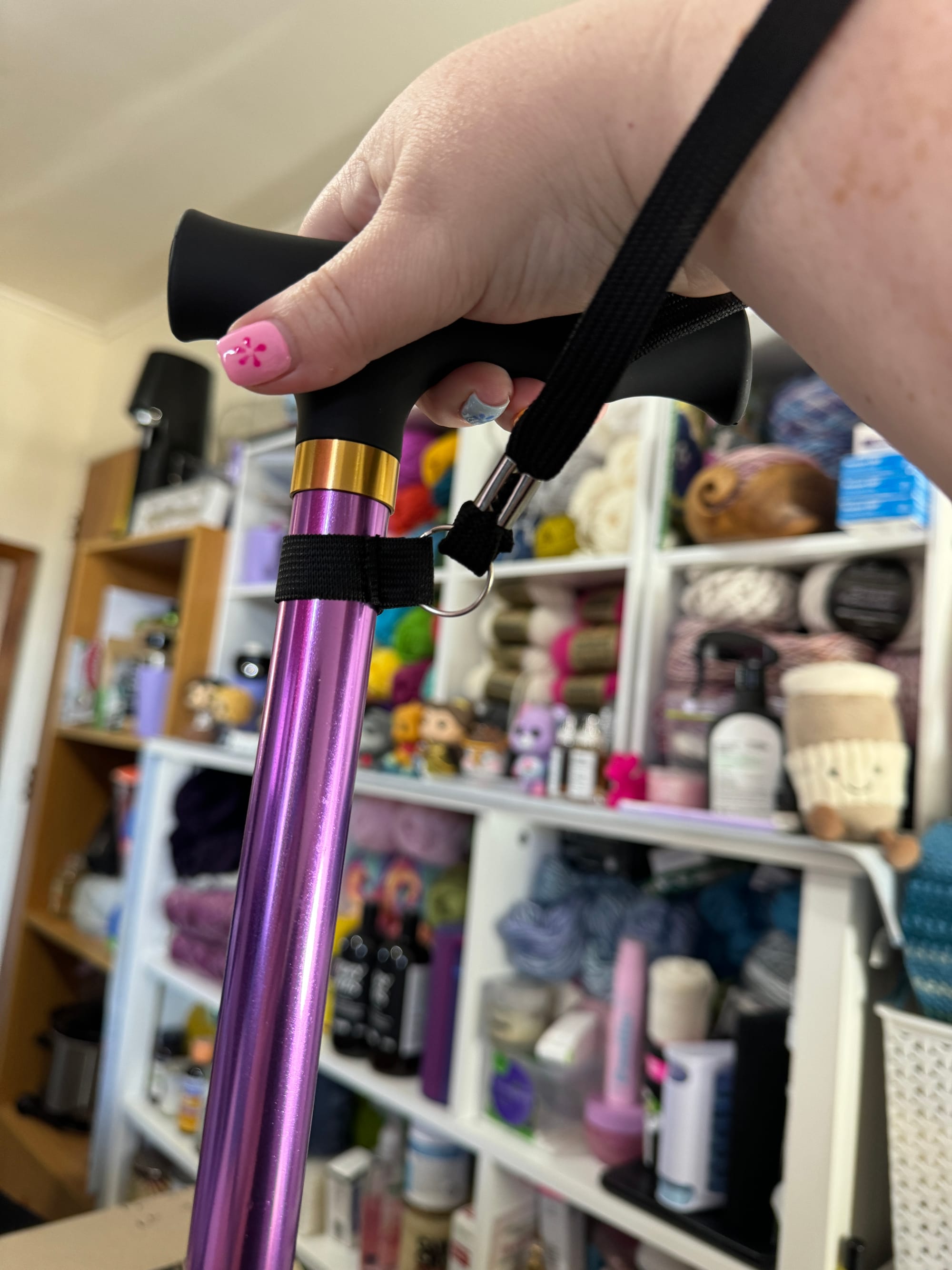
By this time the vestibular aspect had really kicked up several notches as well. It was at the stage where I couldn’t really walk without holding onto something or I would lose my balance (even while standing still). After a day out to the donkeys with Bert and losing my balance 3 times within 10 minutes I finally made the decision to get a walking stick.

I’m currently rocking a metallic purple stick and it’s saved me more times than I can count. I now also have a mobility parking permit due to the difficulties walking with vestibular dysfunction. I guess that iPhone alert in January was really onto something after all.
June
Finally I was able to get in for my vestibular function and caloric testing at the New Zealand Dizziness and Balance Centre (the testing referred by the ENT months ago, turns out the waitlist was quite long). These tests were WILD. Throughout the entire session you need to wear big heavy goggles which have several cameras inside to track eye movements. The vestibular audiologist then performs a series of tests, then reviews the footage after each one to see if the eyes did anything weird.
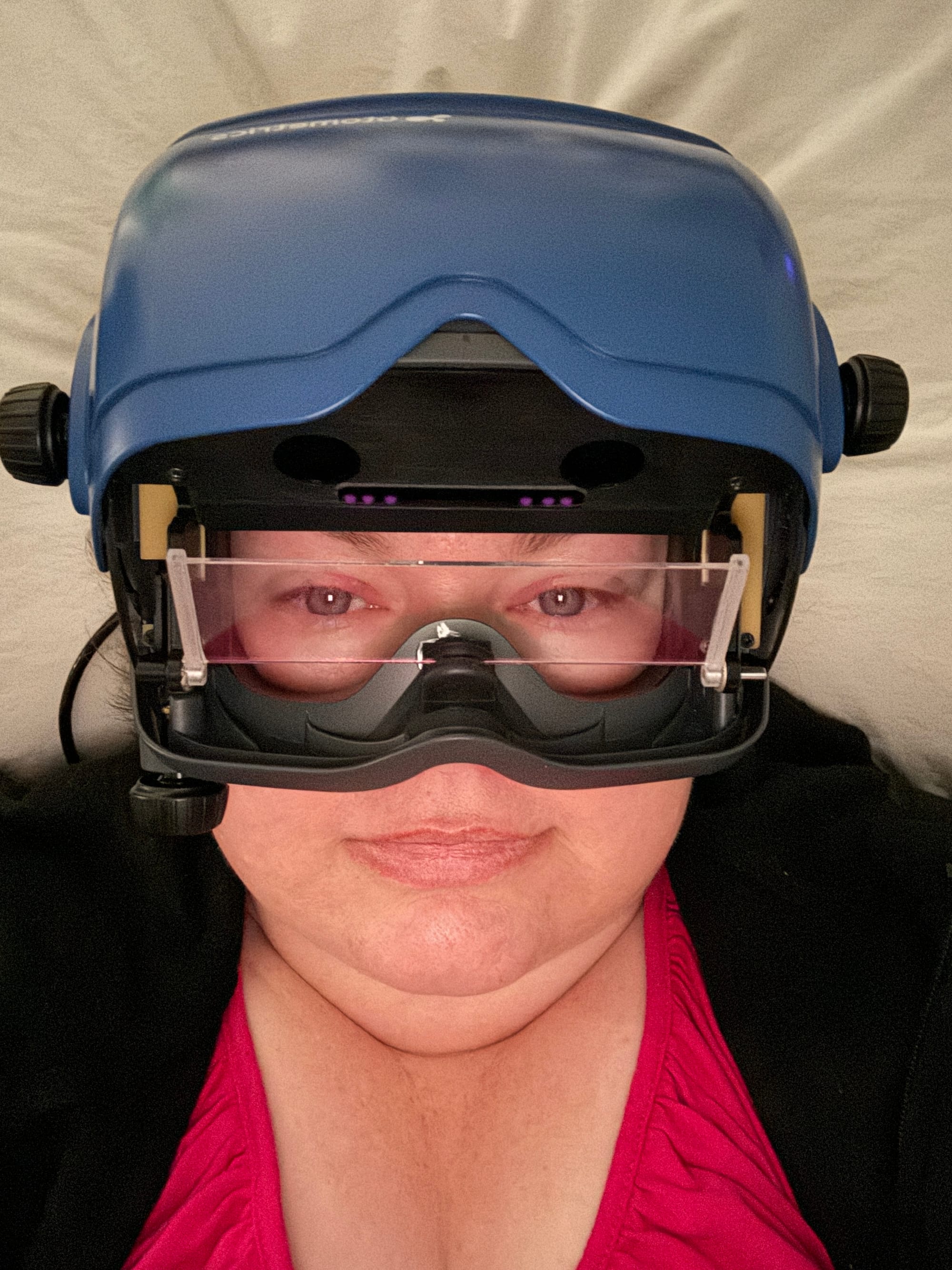
The first test was pretty easy, just channelling my inner cat and following a red dot moving around the wall without moving my head. Then we moved onto the one I was dreading because they had warned me it WOULD cause dizziness. I had to lie on the bed and count backwards from 100 while he blew air at my eardrum for a while, then when I was good and dizzy he would ask me to say either boys names or girls names beginning with specific letters of the alphabet. This was a problem for several reasons - I was dizzy on a good day, let alone during weird tests, and also because I was having significant brain fog at this stage from the topiramate so what was coming to my mind were words but not children's names. I did tell him that I knew Orange wouldn’t be a good name for a girl (he said it might be if she were jaundiced) but when we got to boys names beginning with S I managed to not say Sasquatch out loud. I had to do that test 4 times total, first was cold air in each ear, then warm air. He did do it for a shorter duration than he’d usually do though due to the fact that I already had dizziness symptoms and didn’t want to make me suffer TOO much.
That test was great, but the next test I put in the same league as the feathery eyeball test. I had to sit on the bed, the audiologist would turn my head to the side, then fully bodyslam me onto the bed and hold me there for a few seconds to see what my eyeballs did. Rinse and repeat for the other side. Vestibular testing overall is surprisingly physical and exhausting. The results? All normal/unremarkable.
By this time the side effects of the topiramate were also in full swing. The first one I noticed was my lips tingling and felt like they were vibrating. I then developed frequent pins and needles (neuropathy) in my feet. My appetite completely disappeared which sounds great in theory, but it meant essentially force-feeding myself to try to prevent becoming deficient in anything and making the migraine worse. I developed intense brain fog and would “lose” words which I found particularly hard to cope with. I then started finding myself waking up from surprise naps every day. If I made it a full day without a nap then that was a MASSIVE achievement.
The worst side effect though was one I almost completely missed. My mental health had taken a huge nosedive which I’d put down to normal and somewhat expected response to going from a pretty functional, healthy woman to suddenly having a chronic pain disorder and requiring a cane to move around in this world. I stopped being able to cope with a lot of my normal daily activities and had to make some pretty big changes to accommodate this. It wasn’t until very recently that I realised this was an extremely common side effect of this medication so I immediately contacted my GP to make a plan to discuss coming off it again. While talking with her we realised that I wasn’t really experiencing any benefits from the topiramate, only negative effects so she is in full agreement about coming off them. The issue though is that you have to come off them the same way you start… very slowly. This is still a work in progress.
July
Out of the blue I got a call from one of the other neurologists who I had been referred to initially, asking if I still wanted a consult. I thought - hey why not. A second opinion never hurt anyone. That consult happened to be this past week and I am pleased to announce that there were no feathers involved!
Essentially he agreed with the NDPH diagnosis, but said to focus more on the vestibular migraine aspect of it. He had a few more suggestions in terms of medications and supplements to try which I’m still thinking over because there are definitely pros and cons to these. I have begun one of the supplements but I’m being cautious with adding things in at this stage and will be talking to my GP about the other suggestions.
This was the first time I’ve been able to ask what this is likely to look like longterm and he believes what will probably happen (particularly if I can tolerate the meds) is that gradually there will become breaks in the migraine, and these breaks will get longer and longer until eventually I am having a couple of migraines a month. Considering this has now been going for 5 months continuously that definitely sounds like a huge improvement but there’s no way to tell when that day will come.
Meanwhile, we’re still trying to find ways to essentially co-exist with this situation. I’m still needing to rest a lot so can’t work a full 40 hour week right now. Getting back to full-time is one of my main goals at the moment but this is likely going to take a bit longer than I’d like.
I’ve also discovered that I’ve become quite light-sensitive and a bit sound-sensitive as well. The light sensitivity came on quite suddenly but the sound sensitivity seemed to be more gradual, and I didn’t really notice it until I began trying to venture back out into the world again. Fun fact, turns out if the music is loud enough then I can’t walk in a straight line. That was an odd experience!
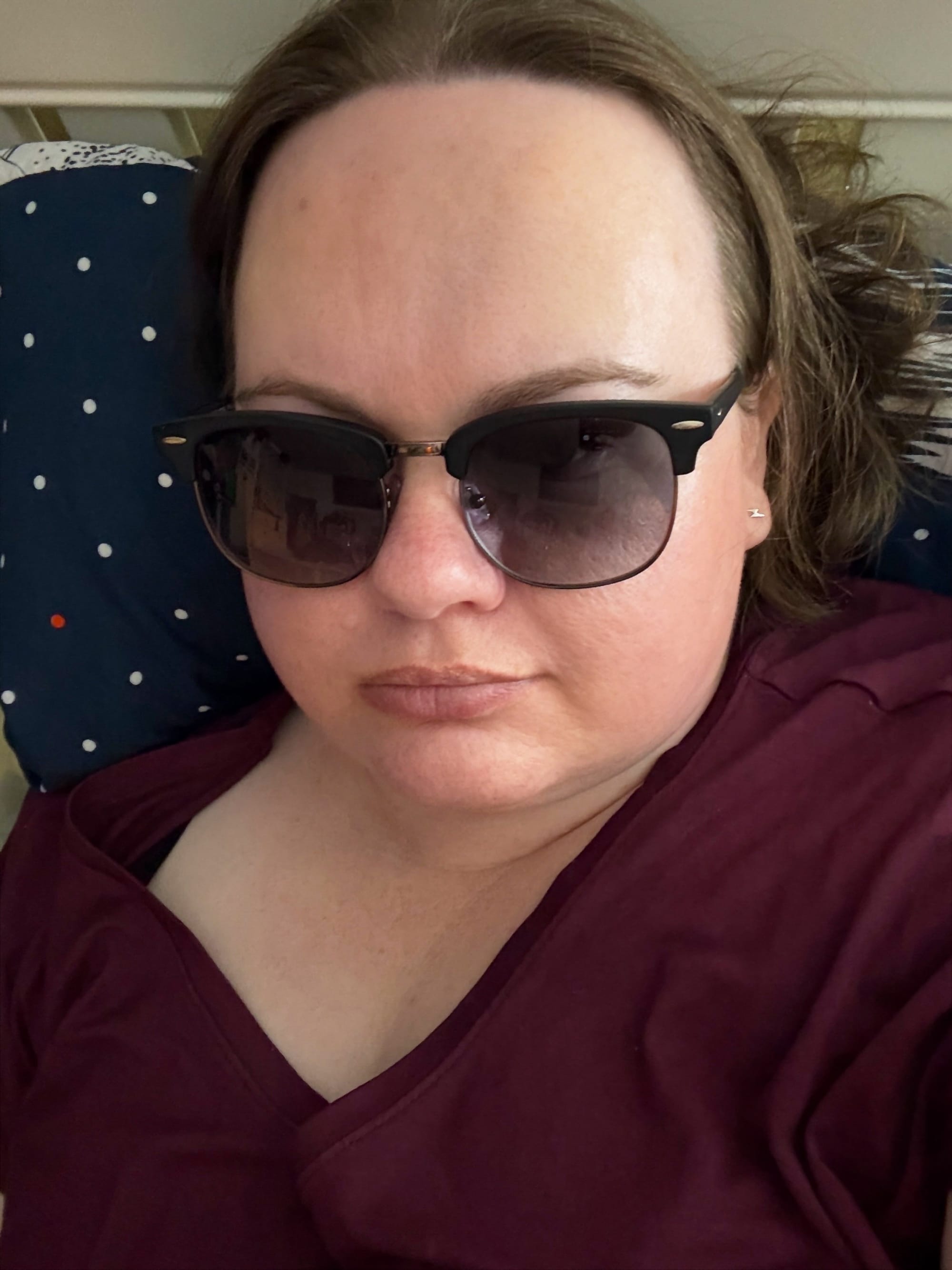
Overall this year has been hard to say the least, but I’m still here and I’m still trying. Today is exactly 5 months since this all began - so that is 5 months of a 24/7 migraine. That’s one of the things I seem to struggle with when explaining it to people - generally they hear that I develop a migraine at some point each day but no… if I am awake then my head is in pain. If I am up and moving around then there’s a good chance that I am also lightheaded or am about to be. The only thing that changes for me is how severe the pain level is, what part of my head the pain is sitting in (it moves around), and whether it’s only pain or if it’s bringing other symptoms like light sensitivity and nausea with it.
I do feel positive though. I’ve been seeing some support people to help strengthen my body (due to the balance issues), work on coping strategies for the pain, looking at my work setup etc. This is all still ongoing too so I’m sure I’ll keep seeing improvements.
And just for fun, here’s a summary of who I’ve seen along the way (and tests I’ve done) in trying to find this diagnosis and treatment:
- 3 GP’s
- Several rounds of blood tests
- ECG
- Full eye test
- Full audiology test
- Head and cervical spine MRI
- ENT specialist
- 2 Neurologists
- Vestibular Audiologist (vestibular function testing and calorics)
- Rehabilitation Physiotherapy
- Occupational Therapist
- Chronic Pain Psychologist
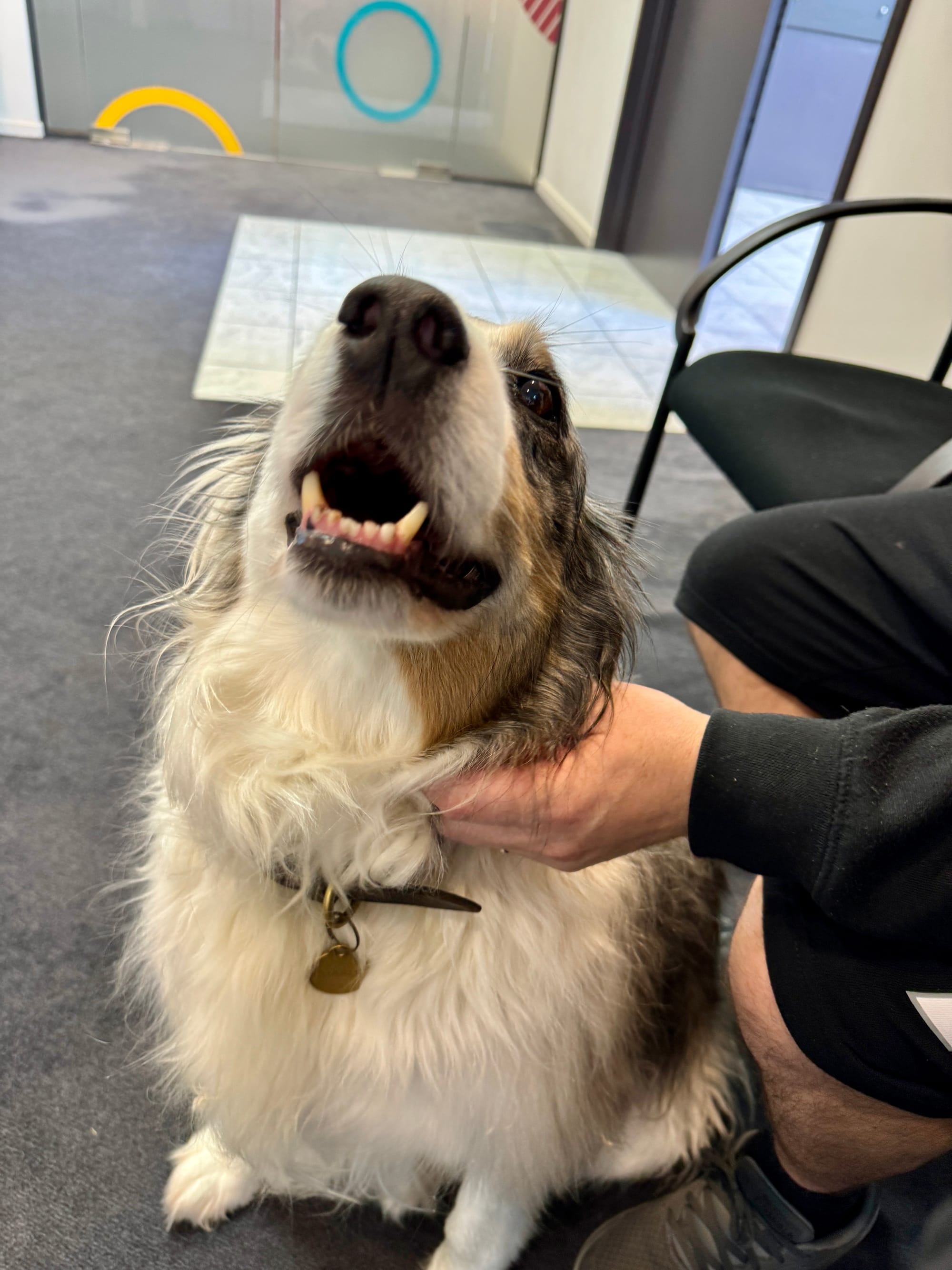
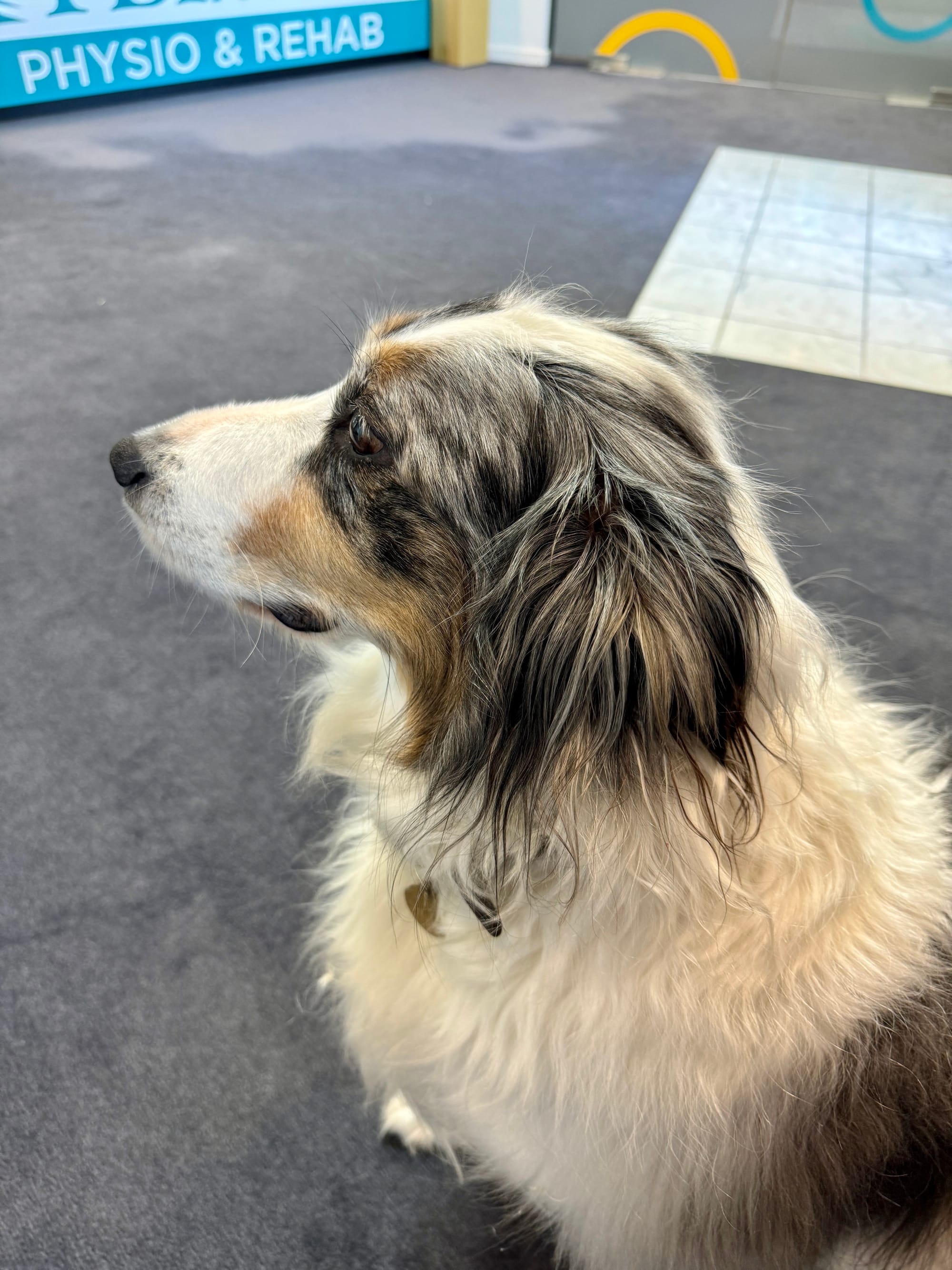
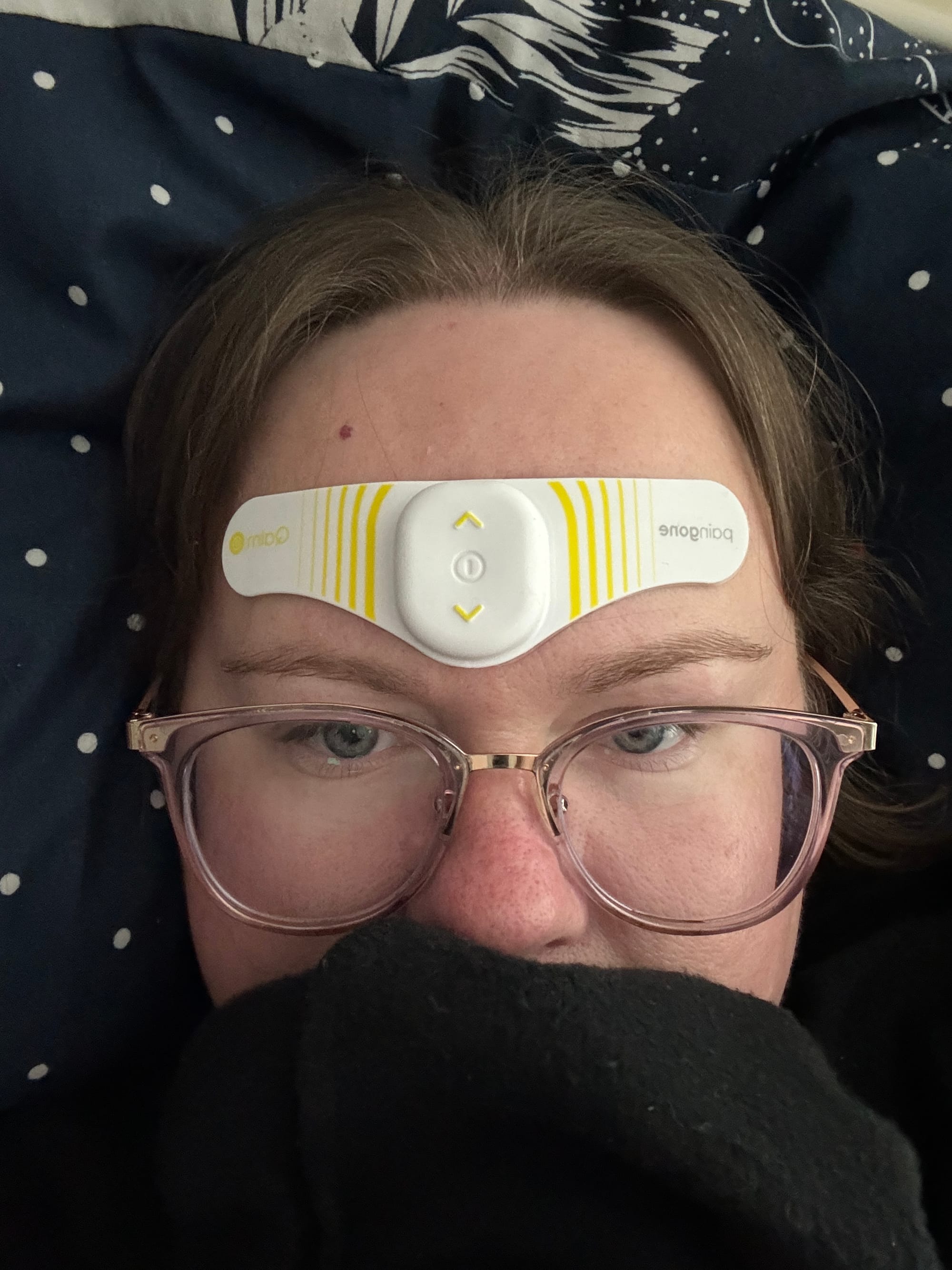
The Physiotherapists dog Charlie! An electro stimulation device attached to my head